
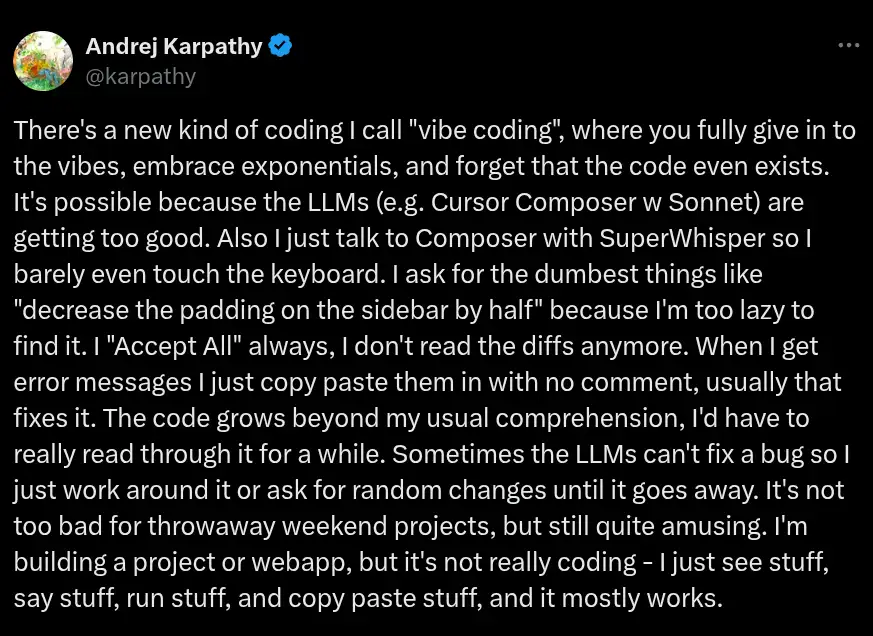
Quick Answer: The way we write code is evolving at an unprecedented pace. Much like how calculators revolutionized mathematics and design software transformed the creative world, artificial intelligence is now reshaping the landscape of software development. One of the most intriguing and promising advancements in this space is an emerging concept known as Vibe Coding. This approach is quickly capturing the attention of developers and AI enthusiasts alike.
It represents a shift from rigid, traditional coding methods toward a more fluid, intuitive, and collaborative experience with AI. By blending human creativity with AI-powered assistance, Vibe Coding enables faster problem-solving and more innovative solutions. As the concept gains momentum, it’s poised to redefine how we think about programming in the years ahead.
Core Principles of Vibe Coding
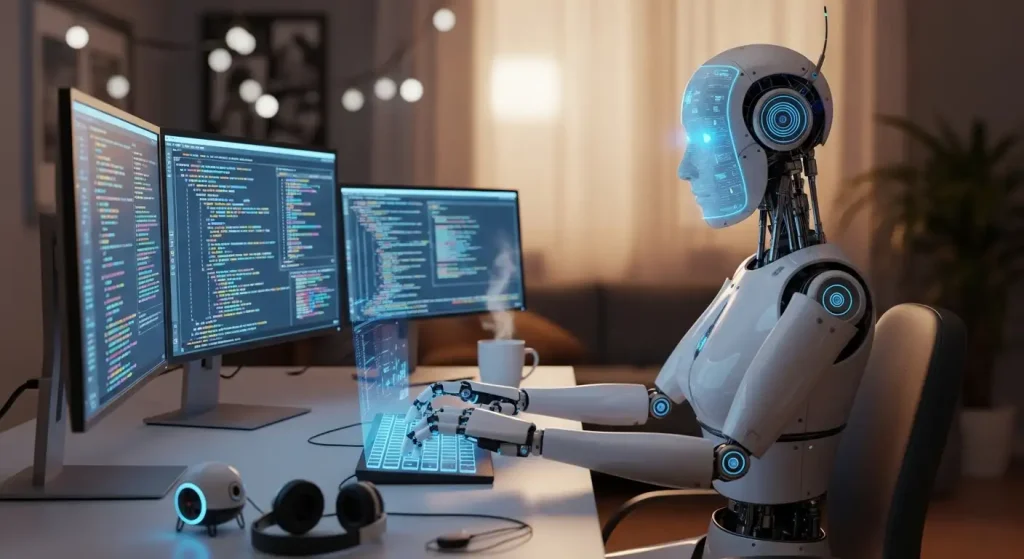
The core principles of Vibe Coding center on making development more natural, adaptive, and collaborative. It begins with intent-first thinking—focusing on what you want to build rather than how to code it. AI brings context awareness, remembering your project’s structure and past decisions for consistency. It also adapts to your personal style, whether concise or highly detailed. The process unfolds through an ongoing conversation, making AI feel like a true coding partner.
- Intent-First Development: Start with what you want to achieve, not how to write it. AI handles the “how.”
- Context Awareness: AI remembers your project’s structure, dependencies, and previous decisions.
- Stylistic Matching: Whether you like concise one-liners or verbose, well-commented scripts—AI adapts.
- Iterative Conversation: The process feels like chatting with a human teammate who constantly learns from you.

The Philosophy Behind Vibe Coding
Vibe Coding is built on the idea that coding should feel natural, intuitive, and collaborative rather than rigid and mechanical. At its core, it shifts the focus from writing perfect syntax to expressing clear intent, letting AI handle the technical translation. This approach embraces human–AI collaboration, where the developer brings creativity, domain knowledge, and problem-solving skills, while AI manages repetitive, mechanical, and context-heavy tasks.
The philosophy values flow over friction, meaning the coding process should feel like a smooth conversation rather than a series of roadblocks. By maintaining context awareness, the AI remembers your project’s structure, past decisions, and style preferences, allowing for deeper alignment. It also encourages stylistic adaptability, ensuring the output matches the coder’s tone, whether concise or verbose. Ultimately, Vibe Coding sees programming as a creative partnership between human imagination and machine intelligence, unlocking faster innovation and more enjoyable development.
Human–AI Collaboration as a Creative Partnership
In Vibe Coding, humans and AI work side-by-side, combining human creativity with machine precision. Developers provide vision, problem-solving, and design thinking, while AI handles the heavy lifting of code generation, optimization, and context management—turning coding into a seamless creative exchange.
From Syntax to Intent
Vibe Coding shifts the developer’s focus from memorizing syntax to clearly expressing intent, letting AI translate ideas into precise code. This frees developers to concentrate on problem-solving, architecture, and innovation rather than technical minutiae.
How Vibe Coding Works
Vibe Coding operates on the principle of translating human intent into functional, context-aware code through ongoing interaction with AI. The process starts when a developer clearly expresses what they want to achieve, rather than specifying how to do it.
The AI then interprets this request, using contextual knowledge from the current project, previous conversations, and coding best practices. It generates a first draft of the solution, which the developer can refine through short, conversational feedback loops.
Throughout this process, the AI keeps track of variables, dependencies, and architectural patterns, ensuring consistency across the codebase. This eliminates the need for constant syntax checks or repetitive boilerplate coding. Essentially, the AI acts like a development partner who understands the bigger picture of the project.
Tools and Platforms for Vibe Coding
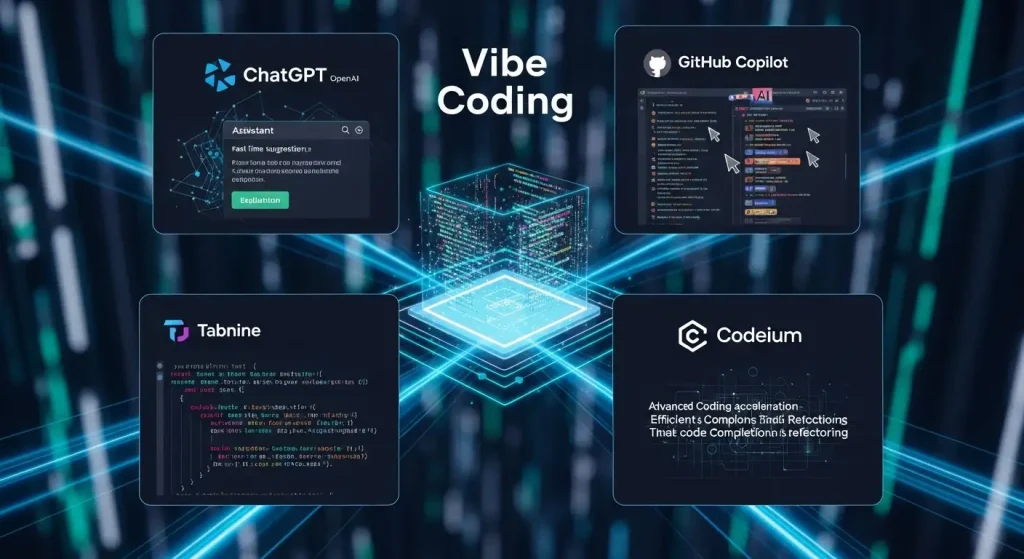
Vibe Coding relies on a range of AI-powered tools and platforms that bridge the gap between human intent and executable code. Popular AI coding assistants like ChatGPT, GitHub Copilot, and Tabnine interpret natural language prompts and produce relevant, context-aware code snippets. Many modern IDEs—such as Visual Studio Code, JetBrains IntelliJ, and Replit—offer integrated AI features to streamline the workflow. Cloud-based platforms like CodeSandbox and Glitch enable real-time collaboration, making Vibe Coding accessible from anywhere. These tools often include context retention, allowing them to remember previous project details for smoother continuity. Some platforms also offer built-in debugging, optimization suggestions, and automated documentation generation. Together, these tools create an ecosystem where developers can focus on creativity while AI handles the repetitive, technical groundwork.
- ChatGPT (OpenAI)
- GitHub Copilot
- Tabnine
- Codeium
Challenges and Limitations
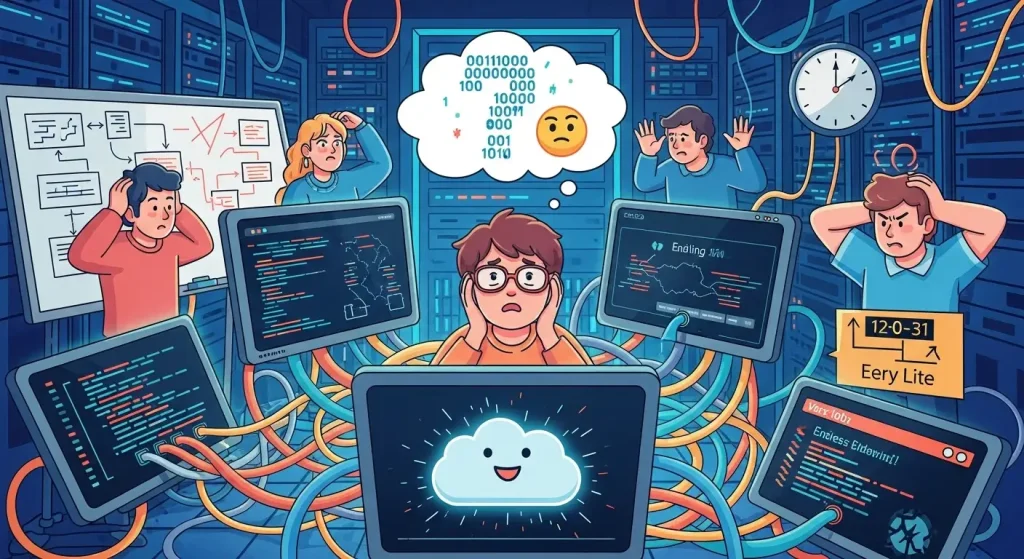
Vibe Coding offers speed and creativity, it comes with its own set of challenges. One major concern is over-reliance on AI, which can weaken a developer’s problem-solving and coding skills over time. AI may also misinterpret intent or produce inaccurate code if prompts lack clarity. There are context limitations, where the AI might forget earlier details in long sessions, leading to inconsistencies. Security and privacy issues can arise when sensitive code or data is shared with cloud-based AI tools. Finally, AI suggestions may not always follow best practices, requiring careful review to ensure quality and maintainability.
- Misinterpretation of Intent – If prompts are unclear, the AI may produce code that doesn’t align with the developer’s actual goals.
- Over-reliance on AI – Depending too much on AI can reduce a developer’s ability to solve problems and write code independently.
- Security RisksSharing proprietary code or sensitive data with cloud-based AI tools can expose projects to potential privacy breaches or unauthorized access.
- Context Loss in Long SessionsAI can sometimes forget earlier project details during extended interactions, leading to inconsistent or repetitive code outputs.
Future Of Vibe Coding
The future of Vibe Coding points toward a more seamless and intelligent collaboration between humans and AI in software development. As AI models become more advanced, they will better understand nuanced intent, maintain long-term project context, and adapt instantly to evolving requirements. Integration with IDEs and cloud platforms will become more sophisticated, enabling real-time, multi-developer AI-assisted collaboration.
Future tools may also include predictive coding, where AI anticipates the developer’s next steps before they are explicitly stated. Enhanced security features will ensure safe handling of sensitive data, addressing current privacy concerns. Additionally, AI will likely evolve to handle more complex architecture decisions, performance optimizations, and even automated testing. Ultimately, Vibe Coding could redefine programming as a conversational, adaptive, and highly efficient creative process.
Conclusion
Vibe Coding heralds a paradigm shift in software development, transcending the constraints of syntax-centric methodologies in favor of a fluid, intent-driven paradigm. By synergizing human ingenuity with the AI’s speed, precision, and contextual intelligence, it facilitates accelerated, immersive, and highly tailored development experiences. This evolution allows developers to channel their cognitive bandwidth toward high-level problem-solving, architectural strategy, and innovation, while delegating repetitive and mechanical processes to AI. While potential pitfalls—such as over-dependence, semantic misalignment, and security vulnerabilities—persist, these risks can be mitigated through disciplined practices and robust governance. At its essence, Vibe Coding redefines programming as a co-creative dialogue, where human vision orchestrates and AI executes with adaptive precision. As the supporting technologies mature, it is poised to become a cornerstone of the next generation of software engineering, transforming code creation into an exercise in clarity, agility, and conceptual elegance.